Dog Harness Guide: Types, Fit & Top Picks
Dog Harness Guide: Types, Fit & Top Picks
Whether you have a small dog that slips out of collars, a large breed that pulls on the leash, or an active dog that needs tactical gear, the right dog harness makes every walk safer and more enjoyable. Unlike a dog collar, a harness distributes pressure across the chest and shoulders — protecting the neck and giving you better control without discomfort.
This guide covers every type of dog harness, how to choose the right fit, and how to put one on correctly.
Why Use a Dog Harness Instead of a Collar?
A dog with harness benefits from:
- Reduced strain on the neck and trachea — especially important for small breeds and brachycephalic dogs
- Better control for dogs that pull, lunge, or are reactive on the leash
- Escape prevention — a well-fitted harness is much harder to slip out of than a collar
- Attachment points for dog leashes, ID tags, and accessories
- Support for senior or post-surgery dogs with mobility issues
Types of Dog Harnesses
1. No-Pull Harness
A no pull harness features a front clip on the chest that redirects your dog's momentum when they lunge forward. This discourages pulling without causing pain — making it ideal for training and reactive dogs. The front clip dog harness is one of the most recommended tools by professional trainers.

TinPaw Anti-Escape Dog Harness & Leash — escape-proof design with front and back clip options
2. Reflective & LED Harness
For early morning or evening walks, a reflective or LED harness dramatically improves visibility. These are especially useful in urban environments or near roads. TinPaw's USB-rechargeable LED harness keeps your dog visible from up to 500 metres away.

TinPaw LED Dog Harness & Leash UK – USB rechargeable, high-visibility design
3. Tactical Dog Harness
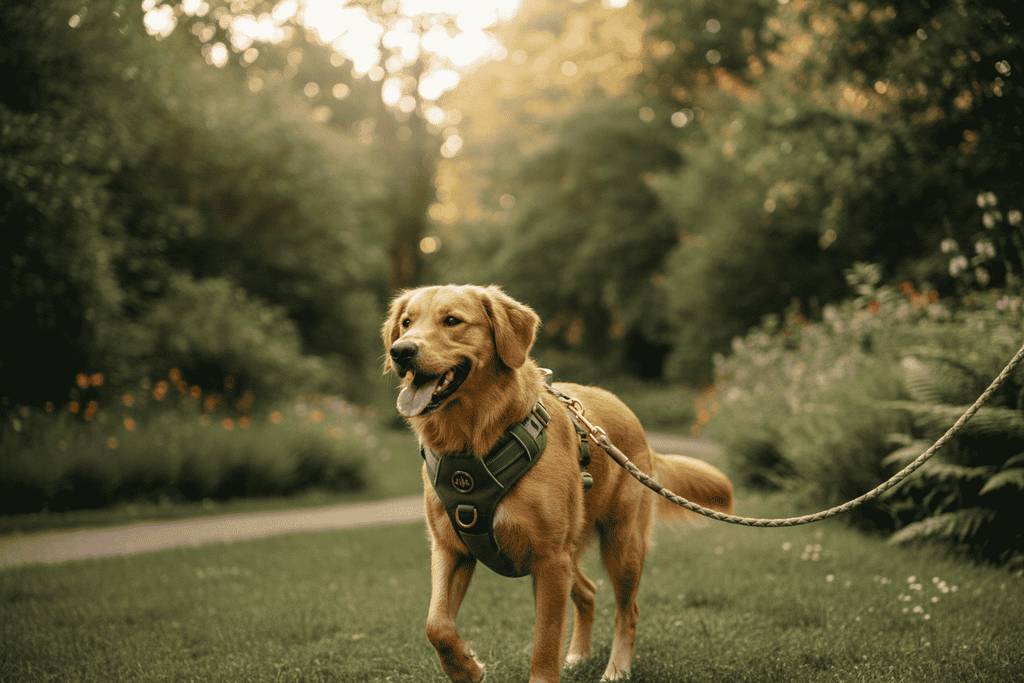
A tactical dog harness is built for durability and function — typically featuring MOLLE webbing for attaching pouches, a sturdy handle for control, and military-grade materials. Ideal for working dogs, hiking, and active outdoor adventures.

TinPaw Tactical Dog Harness & Leash Set — durable, military-style build for active dogs
4. Recovery & Mobility Harness
Senior dogs, post-surgery patients, and dogs with hip dysplasia benefit from a dog mobility support harness. These feature padded lift handles that allow owners to assist their dog up stairs, into cars, or across uneven terrain without straining their own back.

TinPaw Dog Mobility Support Harness — supportive design for senior and post-surgery dogs
5. Small Dog & Vest Harness
A small dog harness or vest-style harness is ideal for toy breeds and puppies. Soft, padded construction prevents chafing, and the wrap-around design distributes pressure gently. Also works as a dog harness for small dogs that tend to escape from traditional step-in designs.

TinPaw Anti-Escape Small Dog Vest Harness — soft, secure fit for small breeds and puppies
6. Reflective Chest Harness
A chest harness with reflective stitching offers everyday safety and comfort. The Y-shaped chest plate keeps the harness away from the shoulder joints — allowing a full, natural range of motion during walks and runs.

TinPaw Reflective Dog Chest Harness & Leash — Y-front design for unrestricted movement
How to Put On a Dog Harness
Many owners ask how to put on a harness dog correctly. Here's a simple step-by-step:
- Hold the harness open and slip your dog's head through the neck opening
- Guide the front legs through the leg holes (for step-in styles)
- Clip the buckles on the back and/or chest
- Check the fit — you should be able to slide two fingers under any strap
- Attach your dog leash to the back or front clip depending on your training goal
For a dog harness for large breeds, ensure the chest plate sits flat and the back strap doesn't ride up toward the neck.
Choosing the Right Size
Sizing varies by brand, but generally:
- XS/S — toy breeds, puppies, French bulldog harness sizes
- M — medium breeds like Spaniels and Beagles
- L/XL — large dog harness for Labradors, German Shepherds, and similar breeds
Always measure your dog's chest girth (the widest point behind the front legs) and neck circumference before ordering.
Dog Harness vs. Dog Collar: Which Is Better?
Both have their place. A dog collar is ideal for ID tags and everyday wear, while a dog with harness is better for walks, training, and any dog that pulls. Many owners use both — a collar for tags and a harness clipped to a dog leash for walks.
For dogs with tracheal issues, neck injuries, or brachycephalic breeds, a harness is strongly preferred over a collar.
Shop Dog Harnesses at TinPaw
TinPaw's Dog Harnesses collection includes no-pull, reflective, LED, tactical, recovery, and vest harnesses for every breed and size — all with free worldwide shipping.
Also explore:
Related post

14
Aug